
Ground Prepared for Construction or Planting
Lot Clearing in Murray for properties transitioning from wooded or overgrown conditions to usable space
Uncleared lots delay construction timelines, hide grading issues, and harbor invasive species that return each season. Properties in Murray and Paducah with dense undergrowth, volunteer saplings, or mature trees blocking development require systematic removal before site work begins. Lamb Brothers Tree Service handles lot clearing for residential and commercial clients preparing land for building, landscaping installation, or agricultural use where existing vegetation prevents access and creates fire fuel loads.
The process involves felling and removing trees, grinding stumps below grade, extracting root systems that interfere with grading, and clearing brush down to soil level. Equipment selection depends on lot size, tree density, and soil conditions—smaller lots use chainsaw and chipper methods, while larger tracts require machinery that processes material in place and separates debris from topsoil.
Request a site visit to evaluate clearing requirements and discuss which trees or features should remain for erosion control or aesthetic purposes.
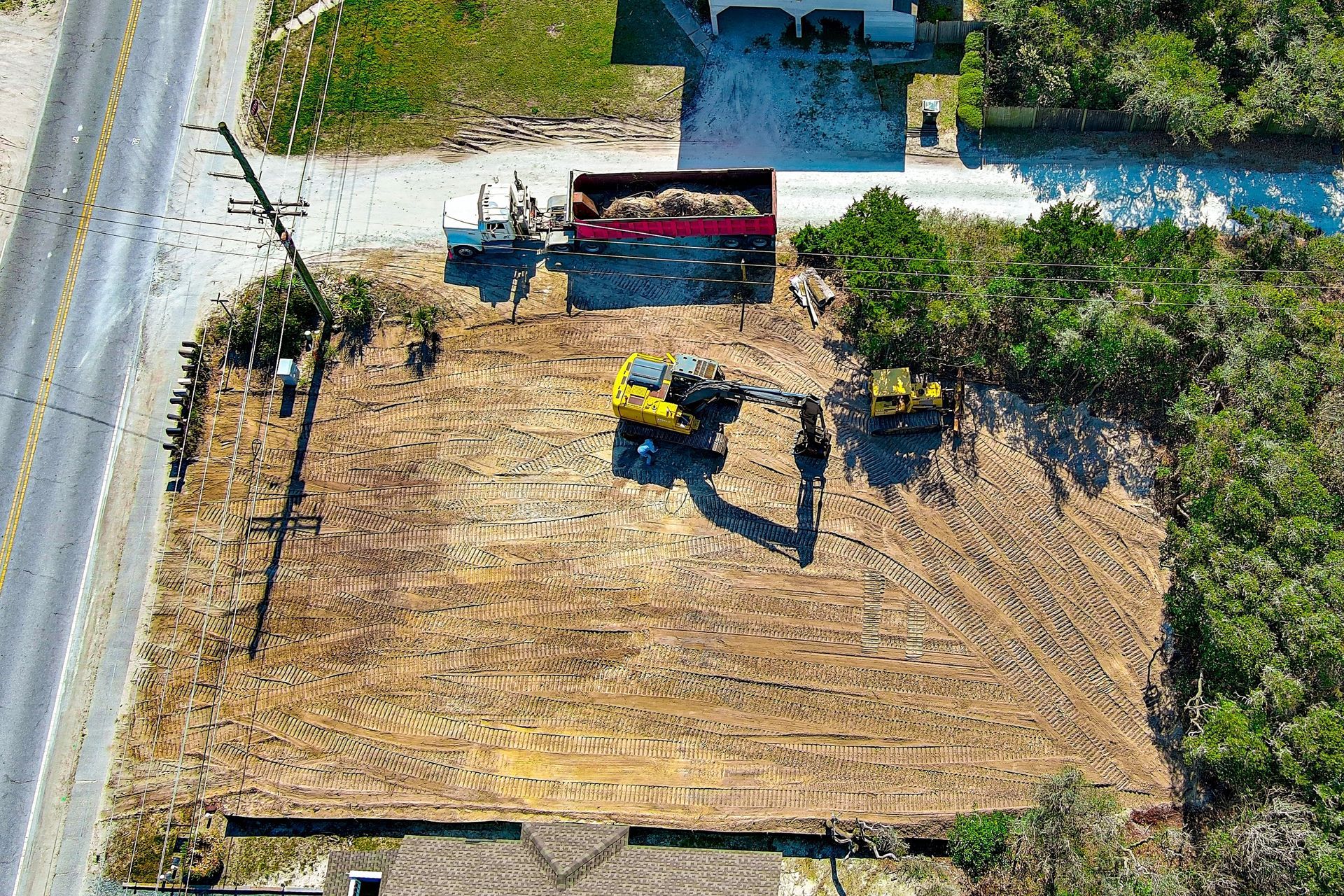
What You Notice Once Clearing Is Finished
Clearing begins with marking boundary lines and identifying which vegetation stays and which goes, then proceeds with tree removal, stump grinding, and brush extraction. Debris is hauled off-site or chipped into mulch depending on material type and client preference. On larger projects, tracked equipment consolidates slash piles and grades the surface to a rough level that exposes drainage patterns and soil composition.
After clearing, the property shows bare soil or low grass with all woody material removed, stumps ground below the surface so they won't interfere with mowing or construction equipment, and clear sight lines across the entire lot. Any trees left standing for shade or windbreak purposes are limbed up to remove low branches, and the ground is free of tripping hazards or hidden root masses that complicate excavation.
Clearing schedules depend on weather and soil moisture—wet conditions create rutting and compaction, while dry periods allow equipment to move without damaging soil structure. Some clients phase clearing to leave temporary windbreaks or shade until construction advances, then remove remaining trees as building progresses.
Answers to Frequent Service Questions
Lot clearing raises questions about timing, disposal, and what happens to the material once it's removed from the site.
1. What's included in lot clearing beyond tree removal?
Clearing removes all woody vegetation including saplings, brush, vines, and stumps, leaving the site ready for grading or landscaping without hidden obstacles.
2. How deep are stumps ground during clearing?
Stumps are ground six to twelve inches below grade so they don't interfere with tilling, foundation work, or utility trenching, and the resulting wood chips backfill the hole.
3. When should lots be cleared relative to construction schedules?
Clearing happens before site grading and utility installation, ideally during dry conditions when equipment can access the property without creating deep ruts or soil compaction.
4. What happens to cleared material?
Wood is hauled to processing facilities, chipped for mulch, or left on-site in designated areas if the client wants it for erosion control or future use, while brush and debris are removed entirely.
5. How does soil type in Murray and Paducah affect clearing?
Clay-heavy soils compact easily under equipment weight, so clearing during dry periods prevents long-term drainage problems and preserves topsoil structure for landscaping.
Lamb Brothers Tree Service clears lots for residential and commercial clients preparing properties for development or landscape renovation. Schedule a property evaluation to determine clearing scope and coordinate timing with your project timeline.